






Orechovica: Domáci recept na orechový likér
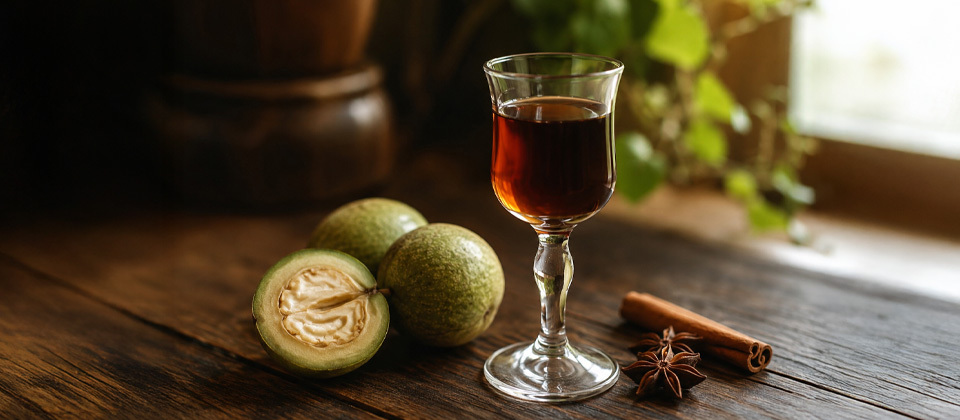
Walnut liqueur smells like Christmas, yet it is made in the middle of summer. It is prepared from green walnuts that still have a soft centre and have not yet developed a hard shell. These young walnuts are transformed into a dark, bittersweet liqueur that our great-grandmothers used to keep both for the festive table and in the home medicine cabinet.
The recipe was passed down from generation to generation, and every family had its own version. The basic principle, however, remains the same: chopped green walnuts, good alcohol, a little spice and finally sugar syrup. Below you will find a complete recipe for a large 3.72-litre preserving jar, a step-by-step method and advice on when to harvest the walnuts.
What is walnut liqueur?
Walnut liqueur is a macerate made from green, unripe walnuts, meaning a drink produced by slowly infusing the walnuts in alcohol. It has a bittersweet flavour with notes of dark chocolate, spices and woody bark. Its character is similar to herbal liqueurs and it is usually served as a digestif after a meal. Under EU Regulation 2019/787, a liqueur must contain at least 15 % alcohol by volume and at least 100 grams of sugar per litre, which homemade walnut liqueur comfortably meets. In Central Europe it is also known under regional names such as ořechovice or svatojánská ořechovka; all of these refer to the same type of Green Walnut Liqueur.
Ingredients for walnut liqueur
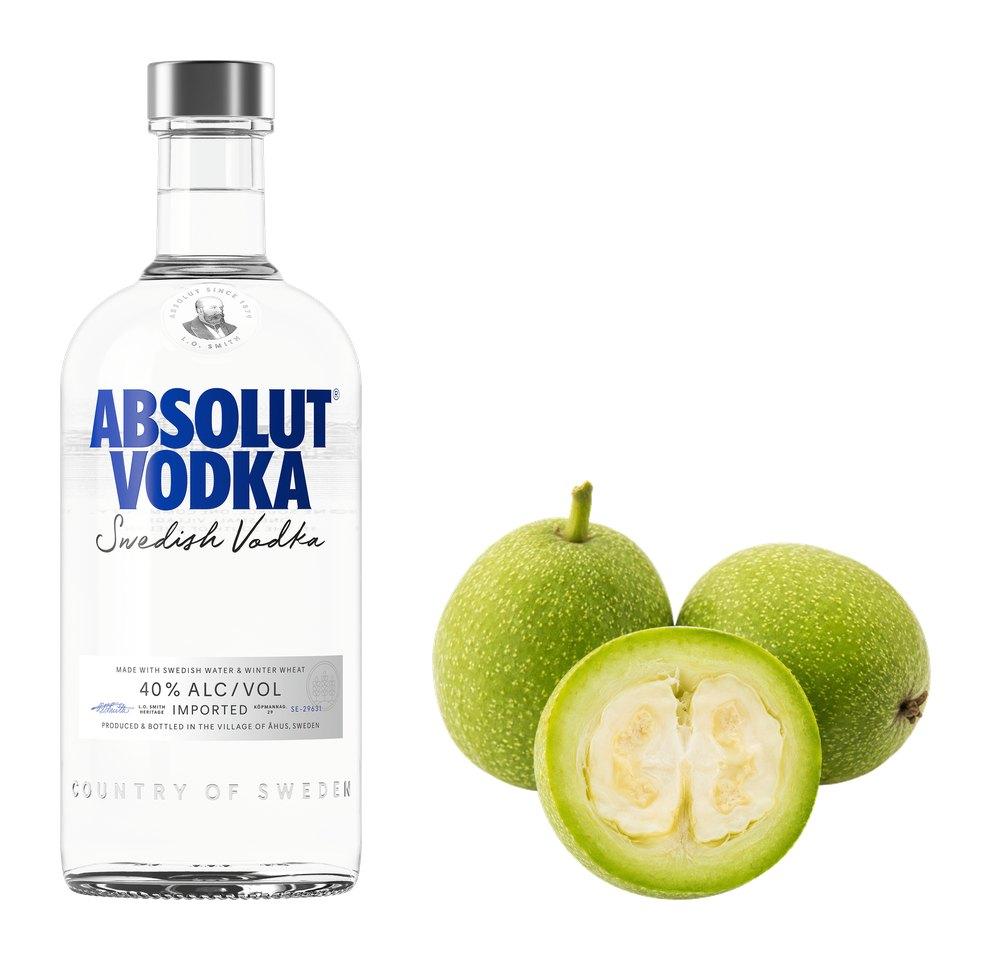
Tip: You can buy the alcohol base for walnut liqueur directly from us – for example Absolut Vodka, rum or a spirit. Prepare the green walnuts and spices at home.
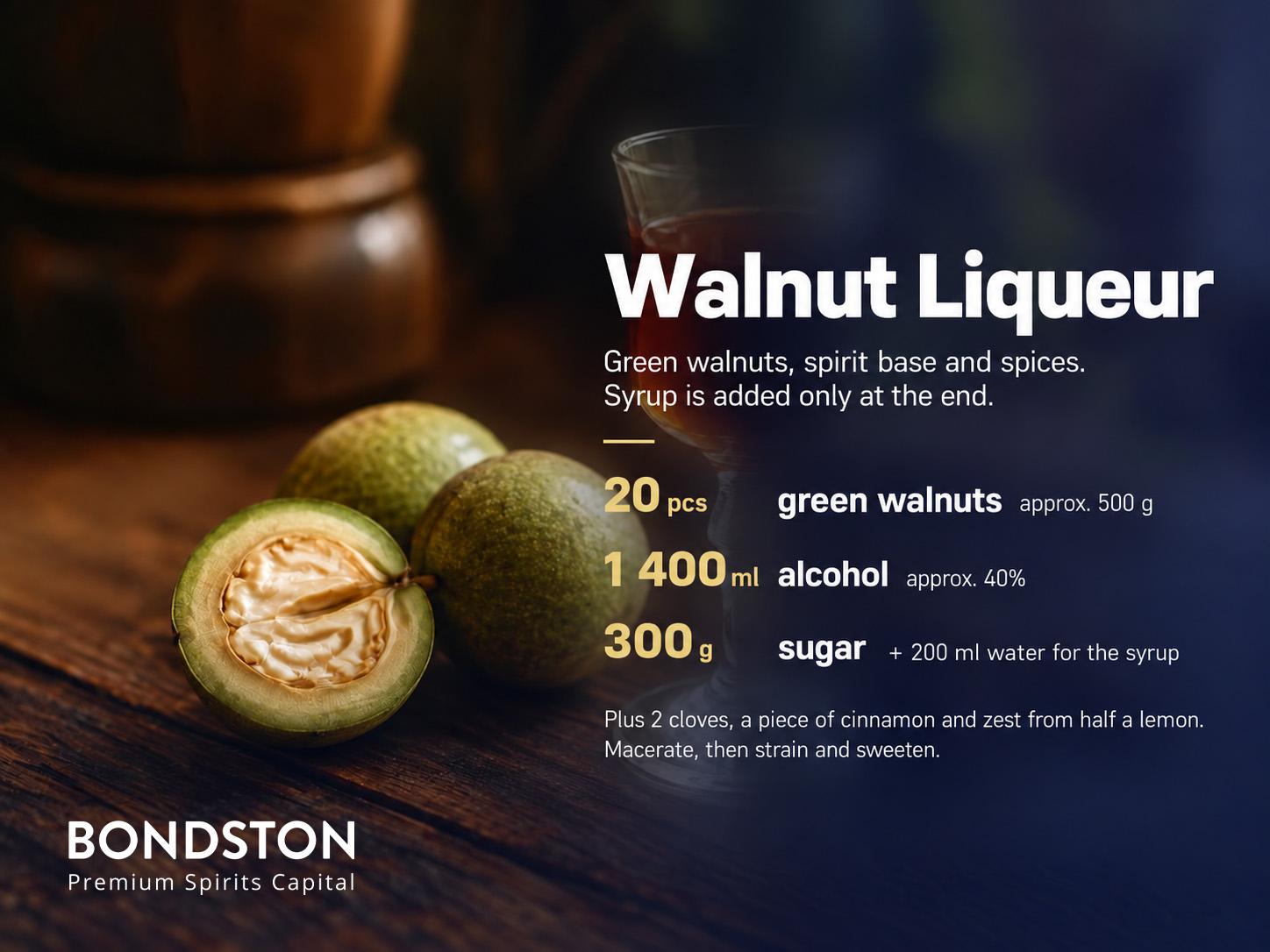
Walnut liqueur is based on four main ingredients: walnuts, alcohol, spices and sugar. The following batch is intended for a large 3.72-litre preserving jar, and the same quantities are used throughout the rest of the recipe:
- 20 green walnuts (about 500 g), before the hard shell has formed
- 1.4 litres of alcohol at around 40 % ABV: neutral vodka (for example Exclusive Kosher Vodka), rum or another grain or fruit spirit
- 2 cloves and 1 whole cinnamon stick
- peel from half an untreated lemon or orange
- 300 g sugar and 200 ml boiled water for the sugar syrup, which is added only at the end
Choose the alcohol base according to how pronounced you want the final flavour to be. Neutral vodka allows the walnuts and spices to stand out, while plum brandy or rum adds fruity or caramel notes and produces a fuller flavour. Drinking alcohol can also be used, but it must first be diluted: to prepare 1,000 ml of approximately 40 % alcohol, mix 500 ml of 80% alcohol with 500 ml of boiled water.
When to harvest green walnuts for walnut liqueur
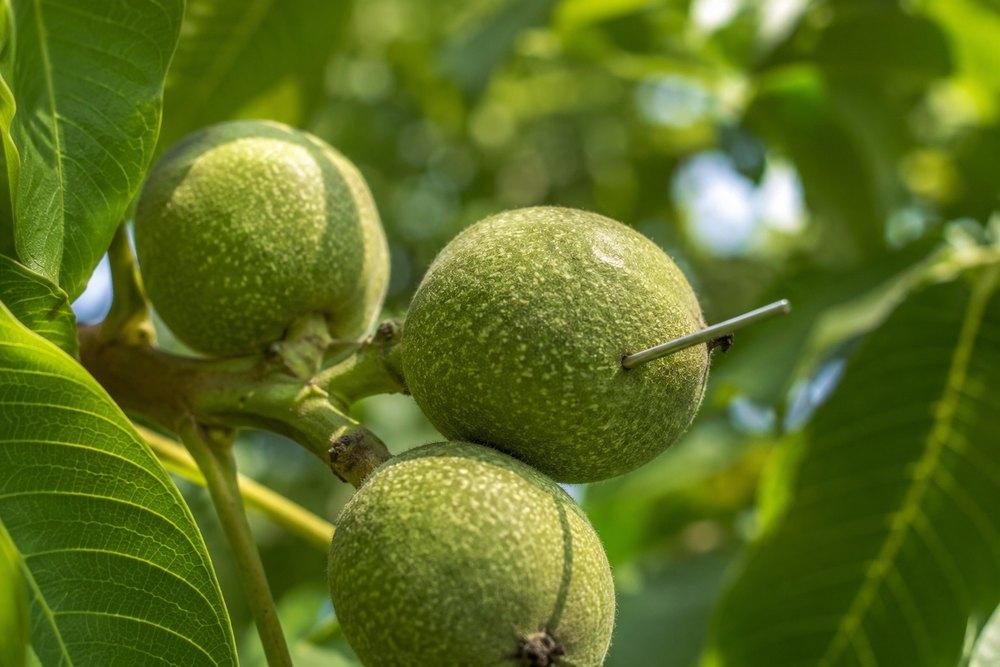
Green walnuts remain suitable for harvesting for several weeks. In Central European conditions, they are usually picked from around mid-June to mid-July. Traditionally, St John’s Day on 24 June is used as a reference point, which is why this drink is sometimes called St John’s walnut liqueur. The exact harvesting period varies from year to year and according to the location of the tree, so always judge the fruit itself rather than relying only on the calendar.
How do you know when the walnuts are ready? Push a needle or a thick skewer through the fruit. If it passes through without resistance and the inside is still soft and jelly-like, the walnut is ideal for processing. If you encounter a hard layer in the centre, the shell has already started to form and you will need to wait until the following year. To be sure, cut one walnut open and inspect the inside.
Ideally, harvest walnuts from trees that have not been chemically treated, as the entire green outer layer is used. Also bear in mind that green walnuts release a very strong natural dye. It stains the skin brown and can remain visible for several days. Wear disposable gloves when cutting them. We also recommend placing a plastic bag or sheet beneath your chopping board to avoid staining your kitchen worktop.
Walnut liqueur step by step
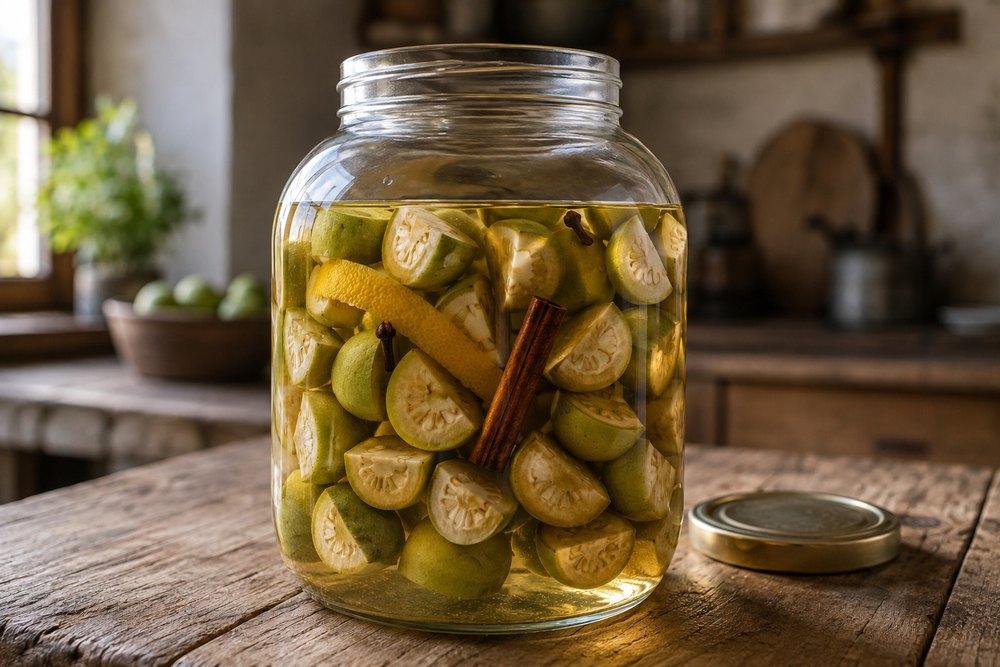
Making walnut liqueur is more about patience than skill. The active preparation takes only a few hours; the rest is handled by maceration, during which the walnuts slowly infuse into the alcohol. Sugar is not added to the jar at the beginning. It is added only after straining, in the form of a syrup.
-
Wash and cut the walnuts: Rinse the green walnuts thoroughly and dry them. Put on disposable gloves and cut each walnut into slices or quarters. Chopped walnuts release more flavour and colour into the alcohol than whole walnuts.
-
Place the walnuts and spices in the jar: Put the chopped walnuts into a clean preserving jar and add 2 cloves, a piece of cinnamon and the lemon peel. Nothing else should be added at this stage.
-
Pour in the alcohol: Add 1,400 ml of alcohol, making sure that all the walnuts are completely submerged, and close the jar tightly. Pieces sticking above the surface may spoil when exposed to air.
-
Leave to macerate in the light: This is where walnut liqueur differs from many other homemade alcoholic drinks. While ageing wine or fruit brandy prefers cool and dark conditions, the macerate needs warmth and light. Place the jar on a sunny windowsill and leave it to infuse for 4 to 6 weeks. Gently shake the jar approximately every other day.
-
Strain and filter: Once the liquid has darkened to the colour of strong tea or dark coffee, remove the walnuts and strain the liquid through a sieve. You will be left with a clear, dark macerate.
-
Add the sugar syrup: Dissolve 300 g of sugar or honey in 200 ml of water, briefly bring it to the boil and allow it to cool completely. Gradually add the syrup to the strained macerate, tasting as you go. Add only as much syrup as suits your preference. With the full amount of syrup, the finished walnut liqueur will contain approximately 30% alcohol by volume.
-
Transfer to a bottle: Pour the sweetened walnut liqueur into a dark glass bottle and seal it well. The next stage is ageing, which will transform the young macerate into a rounded liqueur.
Ageing: Why it is worth waiting
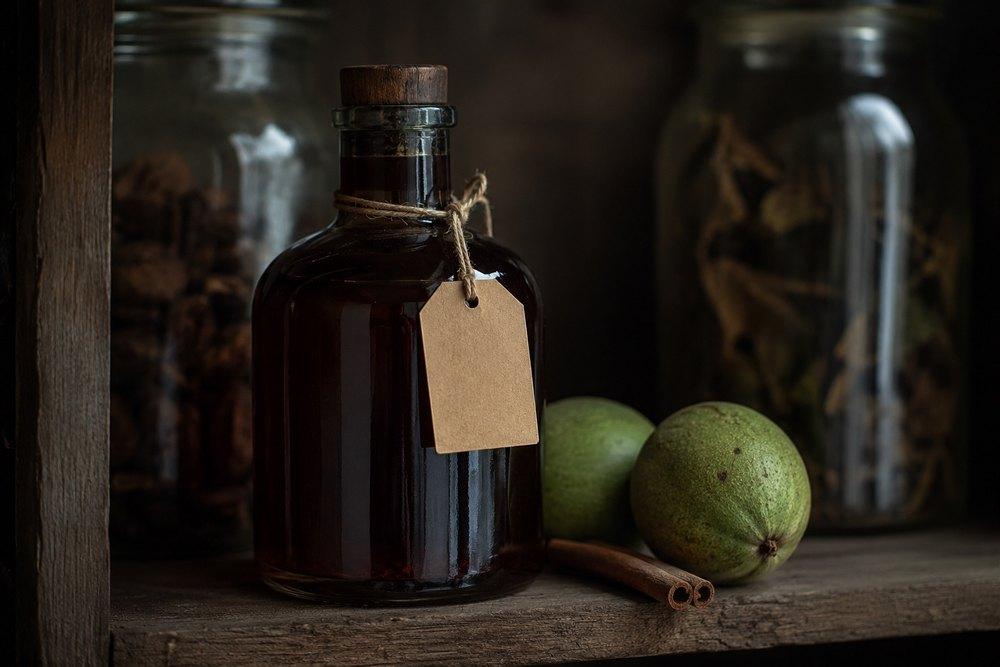
Freshly sweetened walnut liqueur is still sharp and young. It develops its real depth only during ageing. Store the bottle in a cool, dark place, such as a pantry or cellar, and allow it to mature for at least 2 to 3 months. It is usually at its best when left to rest from the summer harvest until Christmas.
During ageing, the sharp flavours soften, the bitterness moves into the background and the spices blend into a more harmonious whole. Time achieves something that no additional ingredient can replace. Properly stored walnut liqueur can keep for several years and often becomes smoother with age.
Why sugar is added only after maceration
Adding sugar syrup only after straining has two advantages. Pure alcohol extracts more flavour, colour and aroma from the green walnuts than a mixture that already contains sugar. It also allows you to adjust the sweetness to your own taste because you are sweetening the finished macerate rather than guessing several weeks in advance.
Add the syrup gradually in small amounts and stir and taste after each addition. Some people use the whole batch, while others prefer less. Some or all of the sugar can also be replaced with honey. Honey gives the liqueur a softer texture, fuller flavour and a subtle floral finish.
Variations: Plum brandy, rum or cognac
Homemade walnut liqueur made with plum brandy is one of the most popular variations. Plum brandy provides a fruity base that complements the bittersweet walnuts and creates a softer result than neutral spirit.
If you prefer darker and sweeter flavours, try cognac or brandy, which can add gentle oak and vanilla notes. A version made with dark rum develops caramel and spicy tones and works particularly well during the colder months. The quantities and method remain the same; only the alcohol base changes.
You can also experiment with the spices. A small piece of vanilla pod or one star anise works well alongside cloves and cinnamon. Do not overdo the spices, though: two cloves and a piece of cinnamon provide more balance than a large handful that overwhelms the walnuts. One practical tip used by previous generations is to write the bottling date on a label and attach it directly to the bottle. That way, you always know exactly how long the walnut liqueur has been ageing.
Where walnut liqueur comes from
Walnut liqueur belongs to the family of traditional homemade macerates made in Central European households from ingredients grown in the garden. Green walnuts had a particularly important place among them. Traditionally, unripe walnuts were believed to have beneficial properties, so Green Walnut Liqueur was prepared not only for its flavour but also as a homemade after-dinner drink. Harvesting was associated with St John’s Day, and the finished bottle was often first opened at Christmas.
How to serve walnut liqueur
Walnut liqueur is usually served at cellar or room temperature in small 20–30 ml glasses. It is most commonly enjoyed as a digestif after a rich meal, much like a herbal liqueur. It also pairs well with coffee or dark chocolate, which complement its bittersweet flavour.
It can also be used in cooking. A spoonful of walnut liqueur works well over vanilla ice cream, in gingerbread batter or dessert creams, and a few millilitres can add an interesting flavour to espresso. It is still a concentrated alcoholic drink at around 30% ABV, so enjoy it responsibly.
Common mistakes when making walnut liqueur
Walnut liqueur is quite forgiving, but a few mistakes can still ruin an entire batch. Most problems occur at the beginning, during harvesting and when preparing the macerate. Avoid these common errors and most of the work is already done.
Mistake No. 1 – Harvesting the walnuts too late: One of the most common mistakes is picking walnuts after the shell has already started to harden inside. Such fruit releases less flavour and the finished walnut liqueur may taste flat. Always cut one walnut open and check that the centre is still soft and jelly-like.
Mistake No. 2 – The walnuts are not completely submerged: If pieces of walnut stick above the surface of the alcohol, they may develop mould and spoil the entire batch. The alcohol must completely cover the contents and the jar should remain tightly sealed. Check during maceration that all pieces remain below the surface.
Mistake No. 3 – Macerating for too long: The walnut macerate should be strained from the walnuts no later than after 6 weeks. Longer maceration can make the finished walnut liqueur excessively bitter and give it a strong medicinal or disinfectant-like aftertaste reminiscent of Ajatin.
Mistake No. 4 – Mixing up the conditions for maceration and ageing: People familiar with fruit brandies sometimes immediately place the jar in a cellar, but walnut liqueur needs warmth and light during maceration. Cool and dark conditions are required only once the finished liqueur begins ageing. If these stages are reversed, the result may be paler and less pronounced.
If you avoid these four mistakes, the rest is mainly about patience. Even a first attempt at homemade walnut liqueur usually turns out well, and each new batch gives you the opportunity to fine-tune the recipe to your own taste.
Frequently asked questions (FAQ)
When should green walnuts be harvested for walnut liqueur?
Green walnuts are generally harvested from around mid-June to mid-July, traditionally around St John’s Day on 24 June. The suitable period lasts several weeks and varies depending on the weather and location of the tree. The condition of the fruit is what matters: a needle should pass through it without resistance and there should be no hard shell inside.
When is sugar added to walnut liqueur?
Only after straining. The walnuts, spices and lemon peel are macerated in pure alcohol for 4 to 6 weeks. After straining, cooled sugar syrup made from 300 g of sugar and 200 ml of boiled water is gradually added. This makes it easy to adjust the sweetness while allowing the alcohol to extract as much flavour as possible from the walnuts beforehand.
What alcohol is best for walnut liqueur?
For this batch, use 1.4 litres of alcohol at around 40 % ABV. Neutral vodka allows the walnuts and spices to stand out, while plum brandy and rum add fruity or caramel notes. If using 80 % drinking alcohol, mix approximately 700 ml of alcohol with 700 ml of boiled water to produce 1.4 litres at around 40 %. After sweetening, the finished walnut liqueur will contain approximately 30% alcohol.
How long should walnut liqueur age before drinking?
Maceration takes 4 to 6 weeks. After straining and sweetening, the liqueur should age for another 2 to 3 months in a cool, dark place. It can be drunk earlier, but ageing softens the sharp flavours and allows the spices to blend properly. Traditionally, walnuts are harvested in June and the first bottle is opened at Christmas.
Why is walnut liqueur also called St John’s walnut liqueur or ořechovice?
The name St John’s walnut liqueur refers to St John’s Day on 24 June, around the traditional harvesting period for green walnuts. The term ořechovice is a regional Czech name used particularly in Moravia. All of these names refer to the same type of homemade walnut liqueur.
Conclusion
Walnut liqueur is one of those drinks where time does most of the work. You simply need to catch the few-week harvesting period between mid-June and mid-July, pick walnuts while their centres are still soft, and leave them to macerate for four to six weeks in alcohol with cloves, cinnamon and lemon peel. Once strained, add the sugar syrup and then simply wait until Christmas.
If you miss the walnut harvest this year, you can also choose from our selection of fruit liqueurs. And when June comes around again, you will know exactly how to make your own batch.