







Kombucha: Čo to je, aké má účinky a ako ju piť

Kombucha may look like an ordinary sparkling iced tea in a glass, but inside it, a living fermentation process is taking place. It is made from sweetened tea that ferments for several days to several weeks beneath a firm layer known as SCOBY, while the flavour, acidity and overall composition of the drink gradually change. Over the past few years, it has become one of the most popular drinks associated with “functional” nutrition and is mainly consumed for digestion and probiotics. But how many of these claims are actually supported by science, and when does it make sense to be cautious? That is exactly what we are going to look at.
What is kombucha?
Kombucha is a fermented drink made from sweetened tea. It is produced by adding a live culture of bacteria and yeast to cooled sweet tea (black or green) and allowing it to ferment for several days to several weeks.
Two things happen at the same time during fermentation. Yeast converts sugar into a small amount of alcohol and carbon dioxide, which gives the drink its gentle fizz. Bacteria then further convert the alcohol into organic acids, mainly acetic acid, which gives kombucha its characteristic tart flavour. Villarreal-Soto and colleagues describe kombucha in their 2018 review published in the Journal of Food Science as a fermented tea that develops through the interaction of several species of bacteria and yeast. The result is a mildly acidic, lightly sparkling drink. (The longer it ferments, the more acidic it becomes and the less residual sugar remains.)
What is SCOBY, also known as the kombucha mushroom?
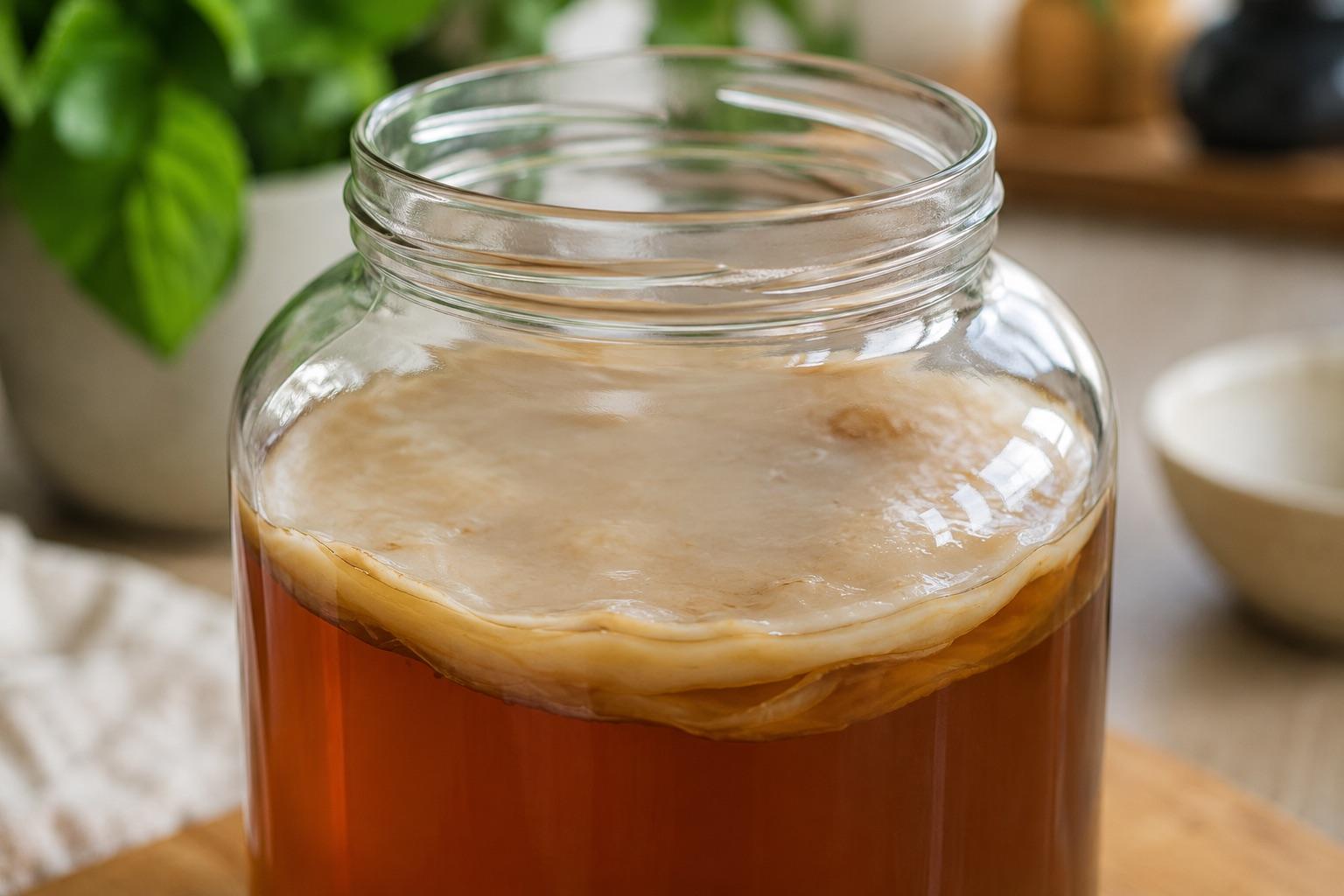
SCOBY stands for “symbiotic culture of bacteria and yeast”. It is commonly referred to as the kombucha mushroom, even though it has nothing to do with mushrooms.
In reality, it is a living culture that forms a gelatinous cellulose layer on the surface during fermentation. It serves as a home for the microorganisms that drive the fermentation process. This disc can be reused, and with each new batch it usually forms another layer, so the kombucha mushroom gradually grows and can be divided and passed on to someone else.
How kombucha is made step by step
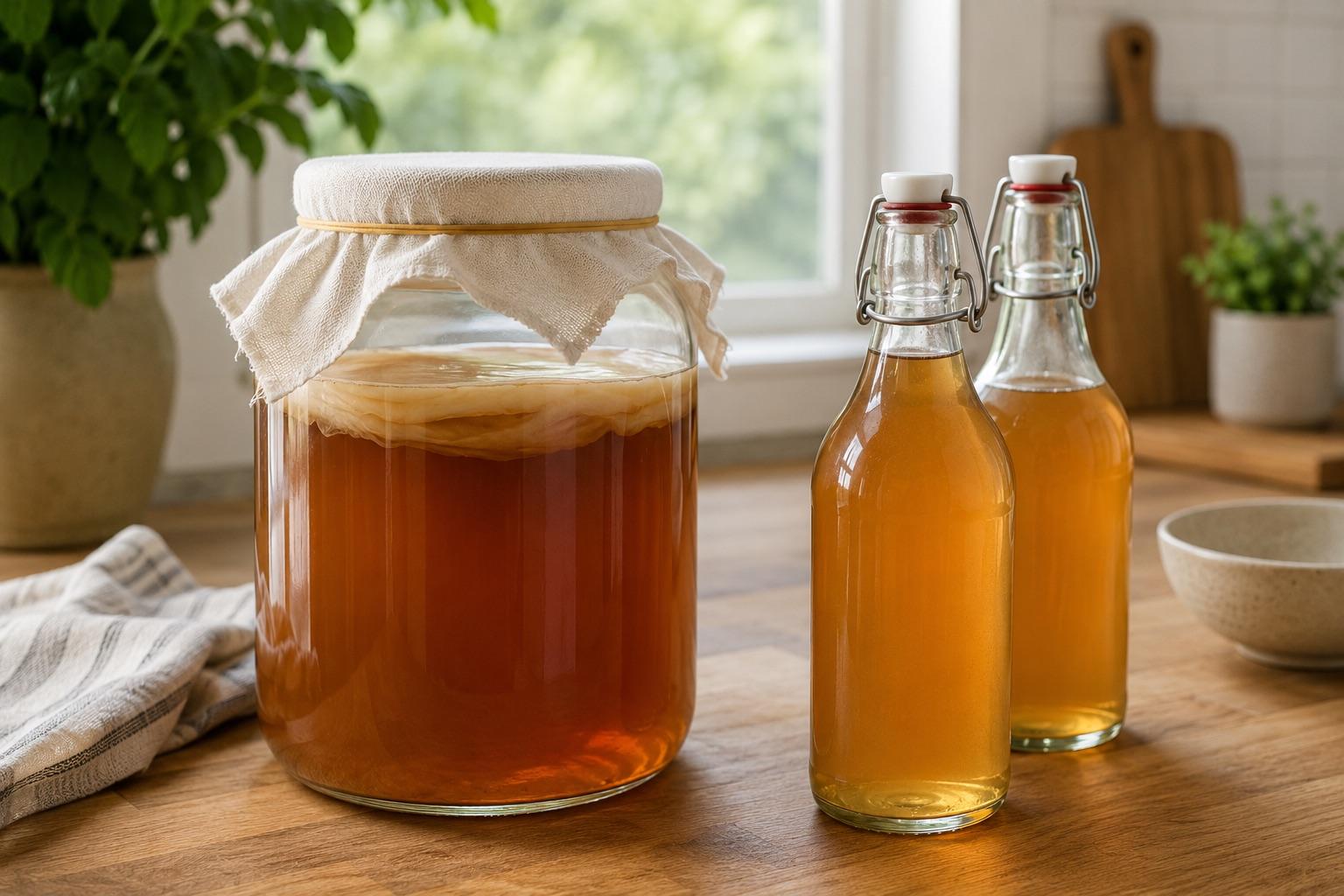
Making kombucha at home is not difficult, but it rewards patience and cleanliness. All you need is sweet tea, a live culture and a few weeks of time. The process can be summed up in several steps.
Step 1 – Make sweet tea: Brew black or green tea, dissolve sugar in it and allow it to cool to room temperature. Hot tea could damage the culture.
Step 2 – Add the SCOBY and starter liquid: Place the kombucha culture into the cooled tea and add a little finished kombucha from the previous batch. This acidifies the drink and helps protect it from unwanted microbes.
Step 3 – Let it ferment: Cover the container with a breathable cloth and leave it away from direct sunlight, usually for around 7 to 14 days. A shorter fermentation produces a sweeter drink, while a longer one produces a more acidic flavour.
Step 4 – Taste and bottle: Once the flavour suits your preferences, pour the kombucha into bottles. Keep the SCOBY aside for the next batch.
Step 5 – Second fermentation (optional): Leave the drink to mature for a few more days in a sealed bottle with a piece of fruit. This gives it more carbonation and a fruity flavour.
Treat the times and temperatures as approximate. The result depends on the amount of sugar, the type of tea and how warm your home is.
Where does kombucha come from?
The exact origin of kombucha has never been reliably documented. Scientific reviews generally place its probable origin in East Asia, specifically in the region of present-day Manchuria, from where it is believed to have gradually spread westwards through Russia and eventually into Europe.
(There are also romantic stories about a physician named Kombu who supposedly brought the drink to a Japanese emperor, but these belong more to folklore than to history.) One thing remains certain: kombucha has been consumed for a long time, and its current wave of popularity has been driven mainly by growing interest in fermented foods and the gut microbiome.
Effects of kombucha: What does science say?
The question “what is kombucha good for?” has many answers. The most common claims relate to supporting digestion, probiotic bacteria and antioxidants from tea. However, most of these claims are still based on laboratory and animal studies rather than research in humans, which is worth keeping in mind when reading enthusiastic articles about kombucha.
This is well illustrated by a systematic review by Kapp and Sumner published in 2019 in the journal Annals of Epidemiology. The authors reviewed 310 articles and found only one study conducted directly in humans. In translation, their conclusion can be summarised as follows:
“Literature outside human research attributes numerous health benefits to kombucha; it is essential that these claims are verified in clinical studies in humans.”
So what can reasonably be said? Thanks to fermentation, kombucha contains live bacteria and organic acids, while the tea contributes polyphenols with antioxidant properties. According to a 2025 review by Li and colleagues published in Biology, these substances may support digestion and the balance of gut microbes. However, this does not mean that kombucha treats diseases. It is a drink, not a medicine, and it certainly does not replace a varied diet or drinking water.
Negative effects and risks of kombucha
In reasonable amounts, kombucha generally has a good reputation among healthy people, but there are still a few things to consider. Most risks are associated with the fact that it is a fermented, acidic drink containing a small amount of alcohol. It is useful to know about them, especially when making kombucha at home.
-
Fermentation always produces a small amount of alcohol. Commercially sold kombucha usually stays below 0.5% alcohol by volume, but homemade or longer-fermented kombucha may contain noticeably more.
-
Fermentation requires sugar, and some of it remains in the finished drink. Flavoured varieties may also contain added sugar, so it is worth checking the ingredients.
-
Organic acids make kombucha acidic, which may irritate a sensitive stomach and, with frequent consumption, may also affect tooth enamel.
-
Because it is made from tea, kombucha also contains caffeine. Fermentation reduces the amount, but it does not disappear completely.
-
Insufficiently clean equipment or an improperly covered container can lead to mould and contamination. If the SCOBY becomes mouldy or the drink smells unusual, discard the batch.
Some groups should take particular care. Pregnant and breastfeeding women, young children and people with weakened immune systems should preferably avoid kombucha, especially unpasteurised homemade versions, or discuss drinking it with a doctor beforehand because of the alcohol, caffeine and live cultures. If you avoid alcohol completely, it may be better to choose a safer option, such as non-alcoholic wine from our selection.
How to drink kombucha and how much per day
Start slowly and listen to your body. If you are drinking kombucha for the first time, begin with just a small glass, around one decilitre, and see how your body responds. Around one to two glasses per day is commonly mentioned, but there is no fixed recommended amount.
It tastes best chilled, and many people find it more comfortable to drink with food rather than on an empty stomach. You can drink it on its own or use it as a refreshing base for non-alcoholic beverages and summer drinks. This is where kombucha connects with our range: alongside it, you can also discover other drinks for relaxing moments, from coffee to cocktails, where kombucha can be used as a refreshing ingredient.
Frequently asked questions (FAQ)
Is kombucha healthy?
Kombucha contains live bacteria, organic acids and antioxidants from tea, so it can be an enjoyable addition to a varied diet. However, most specific health benefits have not yet been confirmed by human studies, so it is better to think of it as a refreshing drink rather than a medicine. In reasonable amounts, it generally does not cause problems for healthy people.
Does kombucha contain alcohol?
Yes, a small amount. Alcohol is produced naturally during fermentation, and some of it remains in the drink. Store-bought kombucha usually contains less than 0.5% alcohol by volume, while homemade or longer-fermented kombucha may contain more. For this reason, it is not recommended for children or pregnant women.
How much kombucha should you drink per day?
There is no universal recommended amount. If you are just starting, stick to a small glass for the first few days and observe how your body responds. Many people then drink around one to two glasses per day. Because kombucha is acidic and contains some sugar and caffeine, it is best not to overdo it.
Can pregnant women drink kombucha?
Caution is advisable here. Kombucha contains a small amount of alcohol, caffeine and live cultures, and homemade versions are often unpasteurised. Many sources therefore recommend that pregnant and breastfeeding women avoid kombucha. The specific decision is best discussed with your doctor.
What is a kombucha mushroom (SCOBY)?
It is a living culture of bacteria and yeast that drives the fermentation process. It forms a gelatinous cellulose layer on the surface, commonly called a kombucha mushroom, even though it has nothing to do with fungi. It can be reused and forms a new layer with each batch.
Conclusion
Kombucha is a fermented sweetened tea that ferments with the help of a symbiotic culture of bacteria and yeast known as SCOBY. It tastes refreshing, slightly acidic and gently sparkling. It is often associated with digestive support and probiotics, but there is still insufficient human research to confirm these effects, so it makes sense to treat it as a good drink rather than a medicine. Keep in mind that it contains some sugar, caffeine and alcohol, and take particular care with homemade kombucha and in more sensitive groups.
If you enjoy fermented and creative drinks, explore the rest of our range as well, from coffee to cocktail ingredients where kombucha can work perfectly as a base. Whatever you pour into your glass, enjoy it in moderation and at your own pace.


