







Griotka: Homemade Sour Cherry Liqueur Recipe
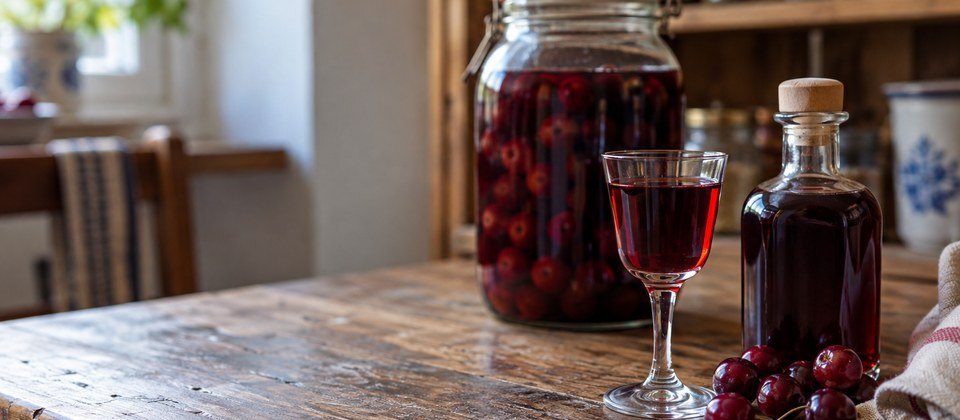
Homemade Griotka cherry liqueur requires just three ingredients: 1 kg of sour cherries, 300 g of sugar and 1 litre of alcohol. The rest takes care of itself during seven weeks of infusion in a bright spot, as the cherries release their colour, tartness and aroma into the alcohol. The result is a deep ruby-red liqueur that many families save until Christmas.
The same proportions work whether you use vodka, dark rum or tuzemák, the traditional rum-style spirit once favoured by grandmothers.
What Is Griotka?
Griotka is a sour cherry liqueur made by infusing sour cherries in alcohol with sugar. No distillation is involved. At home, it is often referred to simply as homemade sour cherry liqueur or sour cherries preserved in alcohol.
Don't confuse it with cherry brandy or fruit spirits. Sour cherry eau-de-vie is a clear fruit spirit distilled from fermented sour cherries, whereas Griotka is a sweet, deep-red liqueur. Under EU Regulation 2019/787, a liqueur must contain at least 15% alcohol by volume and 100 g of sugar per litre. Homemade Griotka generally meets these requirements. The finished liqueur contains approximately 16–20% ABV: alcohol initially at 40% ABV is diluted by cherry juice and dissolved sugar during infusion, reducing its strength to roughly half.
Ingredients for Homemade Griotka
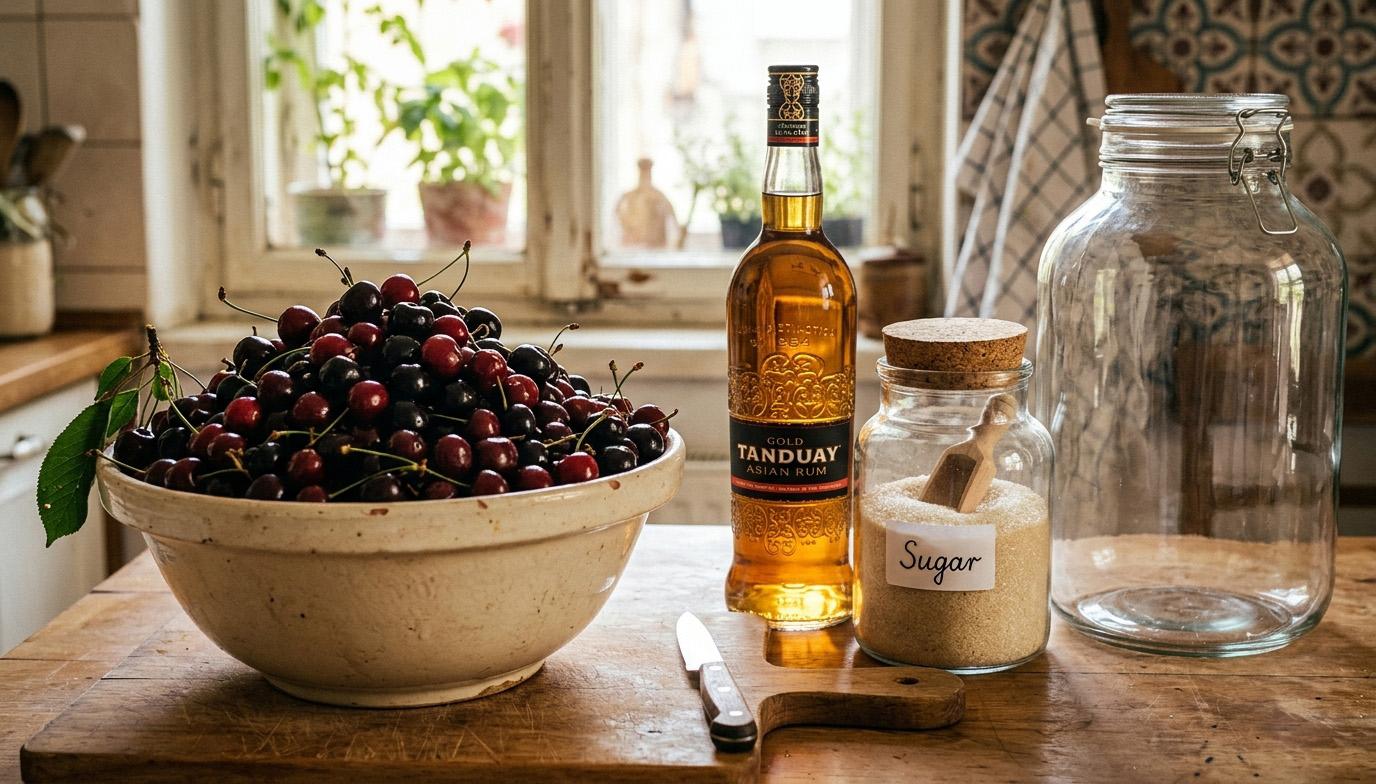
The complete batch takes up approximately 2.5 litres, so use a preserving jar with a capacity of at least 3 litres. This leaves enough room to gently swirl the contents. You will need:
- 1 kg sour cherries – ripe, dark and undamaged, with the pits intact
- 300 g granulated sugar
- 1 litre of alcohol at approximately 40% ABV – vodka, rum, brandy or slivovitz
Your choice of alcohol determines the flavour of the finished Griotka. Neutral vodka allows the sour cherries to shine, so if you prefer a clean, fruity flavour, choose one of our unflavoured vodkas. Dark rum adds caramel and spice notes, giving rum-based Griotka a fuller, rounder character. Tuzemák provides the traditional flavour associated with grandmother's recipes, while slivovitz brings a subtle plum undertone.
The quality of the cherries matters just as much as the alcohol. Only whole, firm fruit should go into the jar. Discard bruised, cracked or rotten cherries, as they could introduce unpleasant flavours and increase the risk of mould.
How to Make Griotka Step by Step
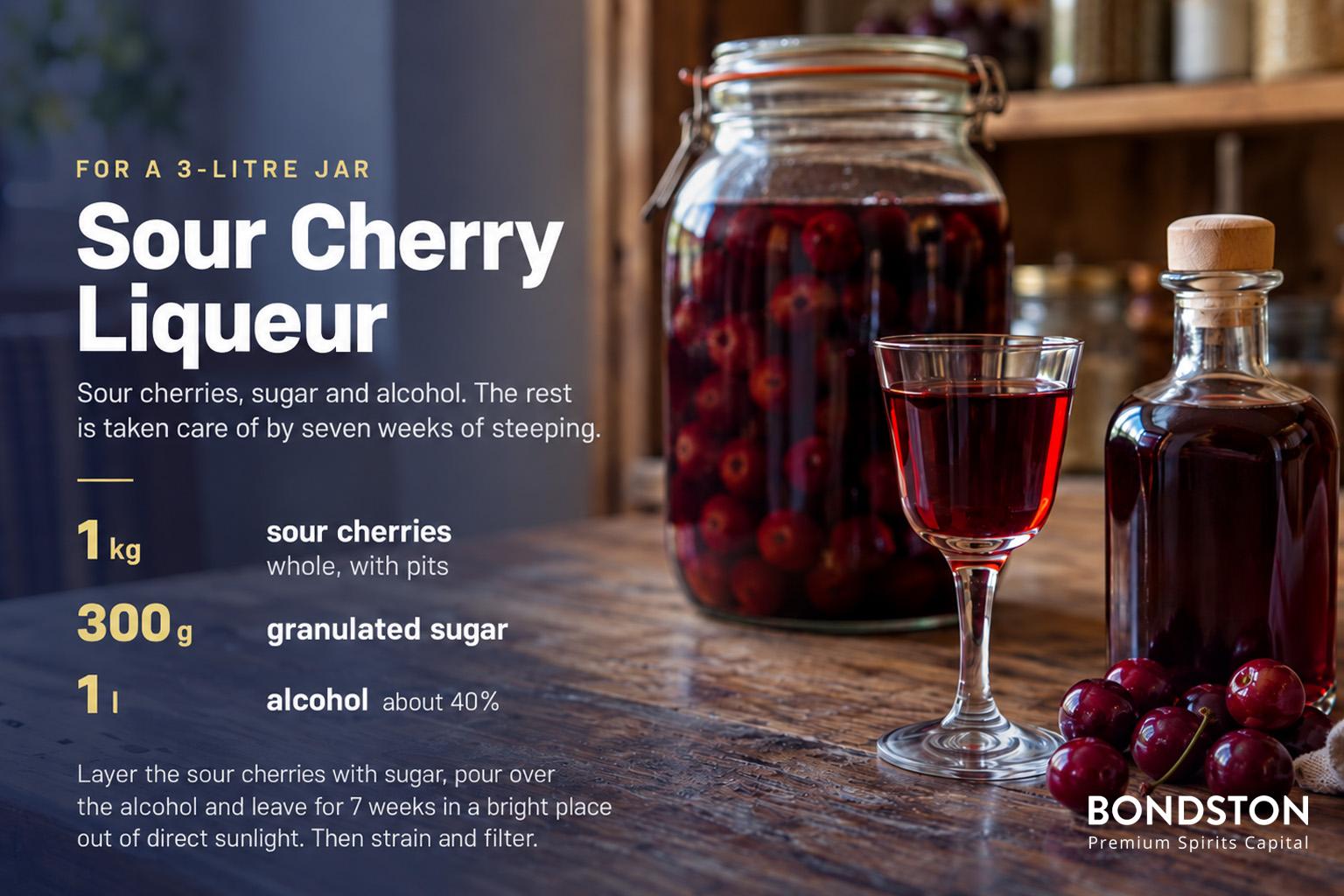
Active preparation takes around half an hour. After that, all you need is patience.
-
Wash the cherries and trim the stems: Rinse the sour cherries in cold water and leave them to drain.
-
Layer the cherries and sugar: Place a layer of cherries into a clean preserving jar that has been rinsed with hot water, then sprinkle with sugar. Continue alternating layers until you have used all 1 kg of cherries and 300 g of sugar.
-
Pour in the alcohol: Slowly add 1 litre of alcohol, making sure all the cherries are submerged. Close the jar tightly with its lid.
-
Infuse for 7 weeks: Place the jar in a bright spot at room temperature, away from direct sunlight, and leave it to infuse for 7 weeks. Gently swirl the closed jar every few days to help the sugar at the bottom dissolve gradually.
-
Strain and filter: Pour the contents through a fine sieve into a clean container and set the cherries aside. Filter the liquid once more through muslin, cheesecloth or a paper coffee filter to remove any remaining fruit pulp.
-
Bottle the liqueur: Pour the finished Griotka into clean glass bottles and seal them tightly. Store in a cool, dark place, such as a pantry or cellar. It can be enjoyed immediately.
Ingredient Ratios and Tips for the Best Griotka
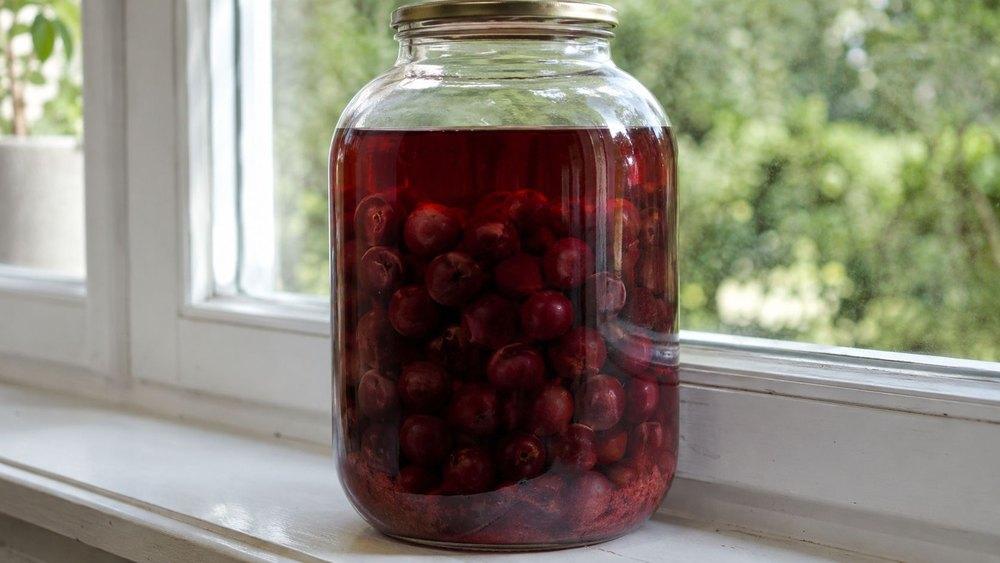
The best Griotka is well balanced: sweet enough to soften the tartness of the cherries, but not so sweet that their natural flavour disappears. Our recipe uses 1 kg of sour cherries, 1 litre of alcohol and 300 g of sugar. Homemade recipes typically call for anywhere between 200 g and 1 kg of sugar per kilogram of cherries. With 300 g, this version stays towards the lower end of that range, producing a sweet but not overly syrupy liqueur.
A few small details can make a big difference:
- Adjust the sweetness at the end. Taste the Griotka after straining. If you prefer it sweeter, dissolve a tablespoon of sugar in a little boiled water and stir it into the finished liqueur. It is easier to add sugar than to remove it.
- Warmth speeds up infusion. At room temperature, Griotka is ready in 7 weeks. In a cool pantry or cellar, allow closer to two months.
- Use spices sparingly. You can add a small piece of cinnamon or a single clove, but too much spice will overpower the cherries.
- Avoid opening the jar unnecessarily. Every opening allows air inside. Gently swirling the sealed jar is enough to help dissolve the sugar.
Should You Leave the Cherry Pits In or Remove Them?
Traditional Griotka is made with whole sour cherries, including their pits. However, the kernels inside cherry pits contain amygdalin, a compound that can release poisonous hydrogen cyanide when the kernels are crushed or chewed. Follow one simple rule: never crush or damage the pits, and only use whole cherries if you are leaving the pits in.
If you prefer extra peace of mind, remove the pits beforehand. It takes more work, but it is the safer option. The quantities and preparation method remain the same, and the pitted cherries can later be used directly in desserts.
Grandmother's Griotka with Tuzemák
Grandmother's traditional Griotka differs from our recipe mainly in the type of alcohol used and the way it was served. Whole sour cherries, including their pits, were layered with sugar and covered with tuzemák. The jar was then left in a bright place away from direct sunlight for several weeks.
Tuzemák gives Griotka a distinctive rum-like aroma with notes of vanilla and raisins. For this traditional version, use a tuzemák spirit such as Nicolaus Tuzemský at 38% ABV. Use the same proportions: 1 litre of spirit for 1 kg of sour cherries and 300 g of sugar. The preparation method remains unchanged.
Traditionally, Griotka was served chilled, sometimes with a few cherries in a taller glass and a long spoon.
Griotka Variations: Sweet Cherries, Rum, Slivovitz and Aronia Berries
The basic recipe can easily be adapted while keeping the starting quantities the same: 1 kg of fruit, 300 g of sugar and 1 litre of alcohol. Simply change the fruit or spirit to create a liqueur with a different character.
Griotka Made with Sweet Cherries
Sweet cherries are sweeter and less acidic than sour cherries, producing a smoother liqueur. If you enjoy the sweetness of traditional sour cherry Griotka, you can reduce the sugar slightly when using sweet cherries. Dark rum pairs particularly well with them, creating a delicious variation of cherries preserved in rum.
Griotka with Sour Cherries and Rum
Follow the same recipe, but use 1,000 ml of dark rum, such as Tanduay Asian Rum Gold. The resulting liqueur will be darker and spicier because the rum contributes its own colour and aroma.
Griotka with Slivovitz
Slivovitz adds a plum-based character, giving the liqueur a sharper, fruitier taste. If the slivovitz is stronger than 40% ABV, first dilute it with cooled boiled water to approximately 40%.
Griotka with Aronia Berries and Blackberries
The same infusion method can also be used with aronia berries or blackberries. Aronia is considerably more astringent than sour cherries, so the resulting liqueur is less fruity and more drying on the palate. Some people prefer this character to the sweet classic sour cherry version.
What to Do with the Cherries Left Over from Griotka
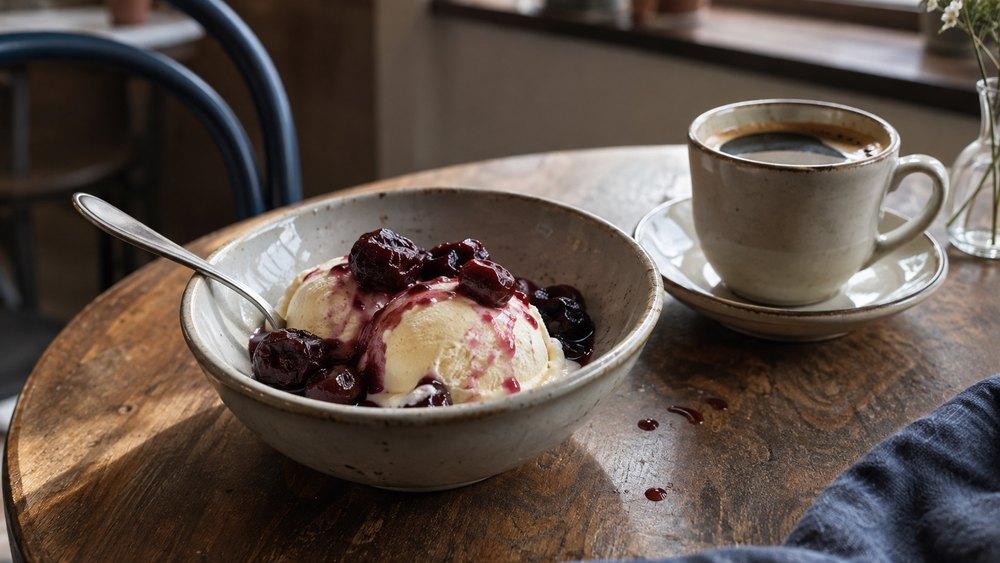
Don't throw away the cherries left in the jar. They have absorbed alcohol and sugar and can be stored in a sealed container in the refrigerator. They also have plenty of uses in desserts:
- as decorations for cakes and pastries
- served with ice cream or whipped cream
- added to sponge cakes or bundt cakes instead of fresh fruit
- as a sweet treat alongside coffee after dinner
Whether serving the cherries with Griotka or using them in desserts, remove the pits first and remember that they contain alcohol. Do not serve them to children or to anyone who will be driving. Alcohol may not evaporate completely, even during baking.
Homemade vs Store-Bought Griotka
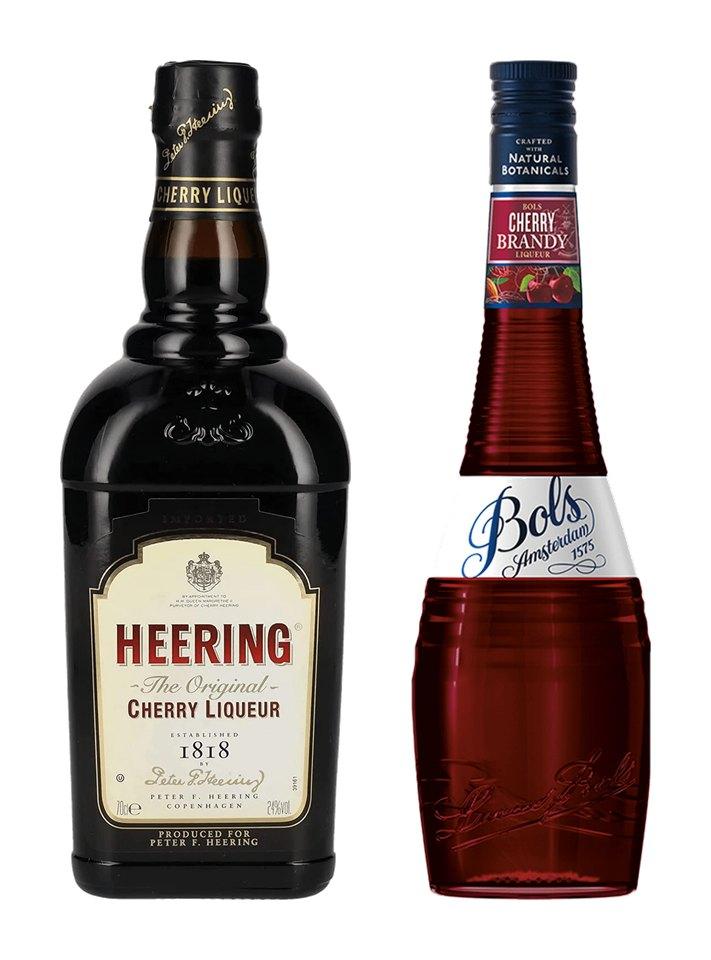
Tip: Discover Heering Cherry, Bols Cherry and other fruit liqueurs in our selection.
Store-bought Griotka is a ready-made cherry liqueur produced by a distillery. It offers consistent flavour and is available throughout the year. Homemade Griotka, on the other hand, allows you to control the sweetness and choose your preferred spirit. Every batch tastes slightly different depending on the cherries used.
If you don't want to wait until the next cherry season, choose a ready-made sweet or sour cherry liqueur. Danish Heering Cherry, with 24% ABV, offers a rich cherry flavour with notes of spice and vanilla. Dutch Bols Cherry, also at 24% ABV, has a pronounced sour cherry character with a delicate almond undertone. Both can be enjoyed neat or in cocktails.
Where Does the Name Griotka Come From?
The name Griotka comes from the French word griotte, meaning sour cherry. However, preserving sour cherries in alcohol has its own tradition in Czech households. Sour cherries ripen in July, and jars were traditionally prepared as a supply for winter, much like other homemade fruit liqueurs made from whatever was ripening in the garden.
Common Mistakes When Making Griotka
Most mistakes happen at the beginning, when filling the jar, and cannot easily be corrected later.
- Cherries above the alcohol. Fruit sticking out above the surface may develop mould when exposed to air, potentially spoiling the entire batch. Make sure the cherries are completely submerged and the lid seals tightly.
- Bruised or rotten cherries. Even one rotten cherry can introduce unpleasant flavours that cannot be removed. Only select whole, firm cherries and use damaged fruit for something else, if suitable.
- Damaged pits. Crushing the cherries can break the pits, potentially releasing hydrogen cyanide from the kernels. Leave the cherries whole, or remove their pits completely before adding them to the jar.
- Straining after just a few days. A short infusion extracts only part of the cherries' colour and flavour, leaving the liqueur tasting predominantly of alcohol. Allow the full seven weeks in a bright spot, or approximately two months in cooler conditions.
Frequently Asked Questions (FAQ)
How Long Should Griotka Be Infused?
Seven weeks is usually sufficient in a bright spot at room temperature. In a cool pantry or cellar, allow approximately two months. Then strain, filter and bottle the liqueur. It can be enjoyed immediately, although many people save it until Christmas.
What Is the Alcohol Content of Homemade Griotka?
Approximately 16–20% ABV, with 38% tuzemák generally producing a result towards the lower end. One litre of alcohol at 40% ABV contains approximately 400 ml of pure alcohol, which is diluted during infusion by the juice from 1 kg of sour cherries and 300 g of dissolved sugar. Sour cherries contain around 86% water, so a considerable amount of juice can pass into the liqueur. The exact strength depends on the juiciness of the fruit and the final volume. Griotka may taste easy to drink, but it is still a liqueur, so enjoy it in small servings.
Which Alcohol Is Best for Making Griotka?
Choose the spirit whose flavour you want to taste in the finished liqueur. Vodka allows the sour cherries to shine, dark rum adds rich sweetness, and slivovitz brings a fruity plum character. Some recipes also combine different spirits. For example, try 500 ml vodka and 500 ml rum. More important than the brand is an alcohol strength of approximately 40% ABV, as used in this recipe.
How Long Does Homemade Griotka Keep?
A tightly sealed bottle stored in a cool, dark place can keep for a long time because the alcohol and sugar help preserve the liqueur. However, if mould develops or the aroma changes, discard it. Store the cherries removed from the jar in the refrigerator and use them sooner than the liqueur itself.
When Is the Best Time to Make Griotka?
Griotka is traditionally prepared when sour cherries ripen, usually in July. A batch started in mid-July will be ready after seven weeks, around the beginning of September, leaving plenty of time for the bottles to rest in the pantry until Christmas.
Conclusion
Making homemade Griotka is mostly about patience. One kilogram of sour cherries, 300 g of sugar, 1 litre of alcohol, seven weeks in a bright spot and careful straining are all you need to create a deep ruby-red liqueur. Serve it to guests or give it as a gift in a beautiful bottle. There are two essential rules: keep the cherries submerged and leave the pits intact. Time will take care of the rest.
If you've missed this year's sour cherry season, explore our range of fruit liqueurs for inspiration. If you enjoy making homemade infusions, try traditional walnut liqueur too. Whether you pour homemade Griotka or a ready-made liqueur, always drink responsibly.


